There is a reason trampoline parks fill up faster than almost any other indoor entertainment format on weekends. Jumping is primal. It does not need instruction, does not require a skill level, and does not discriminate by age. A six-year-old and a thirty-year-old are equally delighted by the experience of being airborne, and that cross-generational appeal is exactly what makes trampoline parks one of the most commercially compelling investments in India’s entertainment industry right now.
But behind every successful trampoline park is a planning process that most first-time investors significantly underestimate. The physical setup, the safety engineering, the space requirements, the equipment quality, and the operational model all need to be right before the first guest ever jumps. Getting any one of these wrong does not just affect performance. It can shut a venue down entirely. This guide covers what profitable trampoline park planning actually looks like, from the ground up.
The Business Case: Why Trampoline Parks Work in India’s Current Market
India’s organised indoor entertainment market is in a period of genuine expansion. Cities across Maharashtra and Goa are seeing new commercial developments with entertainment anchors becoming essential components of viable retail and lifestyle destinations.
In a market like Kolhapur, where quality indoor entertainment options are still limited relative to the size of the urban population, a well-built trampoline park can establish itself as the primary weekend destination for families and young adults within its first quarter of operation. In Panaji, where the year-round tourist economy supplements a strong local entertainment culture, the trampoline park format works as both a family attraction and a group activity destination for travellers.
The revenue model for trampoline parks is also more predictable than most entertainment formats. Session-based pricing creates consistent per-hour revenue, birthday party packages generate high-value group bookings, and school and corporate group sessions build weekday revenue that purely leisure-driven entertainment formats cannot access.
Space and Structural Requirements: What You Need Before Equipment Is Even Discussed
A trampoline park project starts with a structural assessment, not an equipment order. This is where many operators make their first planning error by rushing to machine specifications before confirming that their space can support the installation.
Trampoline parks require minimum ceiling heights of 5.5 to 6 meters in the jumping zones. Structural floor load ratings must accommodate the dynamic weight impact of multiple simultaneous jumpers, which is significantly higher than standard commercial floor loading. The space must allow for safety buffer zones around every trampoline section, foam pit areas, and spectator viewing corridors that do not interfere with active jumping zones.
A minimum viable trampoline park setup typically requires 4,000 to 6,000 square feet of usable floor area. Parks with a full activity mix including main court trampolines, dodgeball courts, foam pits, slam dunk zones, and wall trampolines typically operate from 8,000 to 15,000 square feet.
Getting a structural assessment from an engineer familiar with trampoline park loading requirements before signing a lease is not optional. It is the step that prevents costly surprises after the space has been committed.
Trampoline Park Equipment: What a Complete Setup Includes
The equipment mix in a trampoline park is more varied than most operators initially expect. Understanding each component helps in planning both the layout and the investment.
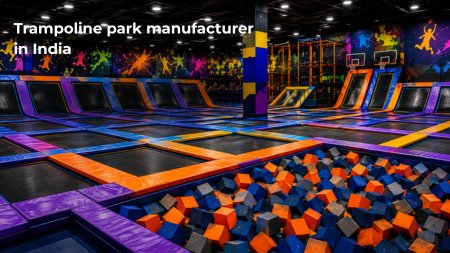
Main Court Trampolines: The open jumping floor is the primary experience of any trampoline park. Commercial trampolines used in FEC environments are engineered to very different specifications from recreational trampolines. Frame strength, spring quality, mat tension, and junction padding all affect both safety performance and the quality of the jumping experience. Working with an experienced trampoline park manufacturer ensures these specifications are met for commercial daily use.
Foam Pit Zones: Foam pits allow guests to attempt tricks, flips, and jumps without the risk of hard landings. Pit depth, foam block density, and the approach trampoline specifications all affect both safety and the overall enjoyment of the experience. Foam pits are one of the highest-engagement zones in any trampoline park and consistently generate the longest individual dwell times.
Dodgeball Courts: Trampoline dodgeball is one of the most popular formats in trampoline parks globally and is growing strongly in Indian markets. The court configuration requires specific trampoline sizes, boundary padding specifications, and spectator viewing arrangements.
Slam Dunk Zones: Adjustable height basketball hoops positioned above a trampoline section allow guests to execute slam dunks that would otherwise be impossible. This zone is particularly popular with teenagers and young adults and creates strong social sharing moments.
Wall Trampolines: Angled wall trampolines allow guests to run up walls, creating a parkour-adjacent experience that is visually spectacular and generates significant organic social media activity from guests filming each other.
Kids’ Toddler Zones: A dedicated lower-energy trampoline zone for children under six with reduced spring tension and additional padding serves the youngest audience and ensures families with toddlers feel genuinely catered to, not just accommodated.
Safety Standards: The Non-Negotiable Foundation
Safety is not a feature of a trampoline park. It is the operating licence. A trampoline park that does not meet safety standards does not stay open.
Every reputable trampoline park manufacturer in India designs and supplies equipment to documented safety standards covering frame engineering, padding specifications, mat tension ratings, and anchor systems. Junction pads, perimeter padding, foam pit specifications, and ceiling clearance all have specific requirements that affect both guest safety and insurance eligibility.
Beyond equipment safety, operational safety protocols including staff-to-jumper ratios, pre-session safety briefings, weight and age restrictions for specific zones, and emergency response procedures all need to be established before the park opens. These are not bureaucratic requirements. They are the operational practices that protect guests and protect the business simultaneously.
Planning the Revenue Model Before You Open
A trampoline park that opens without a clear revenue model is operating on hope rather than strategy. The strongest trampoline park revenue models combine multiple income streams that work together across different times and days.
Session-based jumping admissions generate the primary daily revenue. Tiered session pricing, where 60-minute sessions and 90-minute sessions are priced differently, helps manage flow during peak periods while maximising revenue per guest.
Birthday party packages are the highest-value revenue channel in most trampoline parks. A private party booking that covers session time, party room use, F&B, and add-ons can generate in a single two-hour slot what would otherwise require a full day of individual admissions. Building the party booking infrastructure, including dedicated party rooms, a party menu, and a booking system, into the initial setup rather than adding it later makes the difference between a venue that captures this revenue and one that leaves it on the table.
School group and corporate team bookings generate weekday revenue that turns what would otherwise be quiet periods into productive revenue sessions. These bookings require a dedicated contact process and usually a separate group pricing structure, but they are among the most consistent and least marketing-intensive revenue streams available to a trampoline park operator.
Is your city ready for its first professional trampoline park?
Operators in Solapur, Amravati, Kolhapur, and Panaji are building entertainment venues that are becoming the most talked-about destinations in their cities. If you are planning a trampoline park investment, the right starting point is a conversation with a team that has built them across India.
Talk to HGR Amusement About Your Trampoline Park Project
Choosing the Right Trampoline Park Manufacturer in India
The manufacturer and supplier relationship for a trampoline park project is more consequential than for almost any other family entertainment center equipment investment. The engineering complexity, safety requirements, and installation precision of a trampoline park mean that supplier capability is as important as product quality.
Among trampoline park manufacturers in India, the questions that separate strong partners from weak ones are consistent. Can they provide documented safety compliance for every component they supply? Do they have a portfolio of completed commercial trampoline park installations in India? Can they manage the full installation project, not just equipment delivery? Do they provide structured after-sales support, including padding replacement, mat servicing, and spring maintenance programs?
HGR Amusement brings over 30 years of amusement and entertainment industry experience to trampoline park projects across India. Based in Ahmedabad with one of India’s largest FEC experience showrooms, HGR Amusement supplies complete trampoline park equipment alongside the full range of family entertainment center equipment needed to build complete, well-rounded entertainment venues.
End-to-end project support covering space assessment guidance, equipment specification, professional installation, safety compliance documentation, and structured after-sales service makes HGR Amusement the partner that operators across Maharashtra, Goa, and India trust for trampoline park investments of every scale.
Conclusion: A Trampoline Park Built Right Is Built to Last
The trampoline parks that become institutions in their cities are not the ones that opened fastest. They are the ones that were planned most carefully, built to the right standards, and supported by a supplier relationship that extended well beyond opening day.
In markets like Kolhapur, Amravati, Solapur, and Panaji, the window for establishing that kind of market leadership through a quality trampoline park is open right now. It will not stay open indefinitely.